You Came in Last and Now It's Art: The Adults Buying Back Their Bronze-Place Ribbon Era
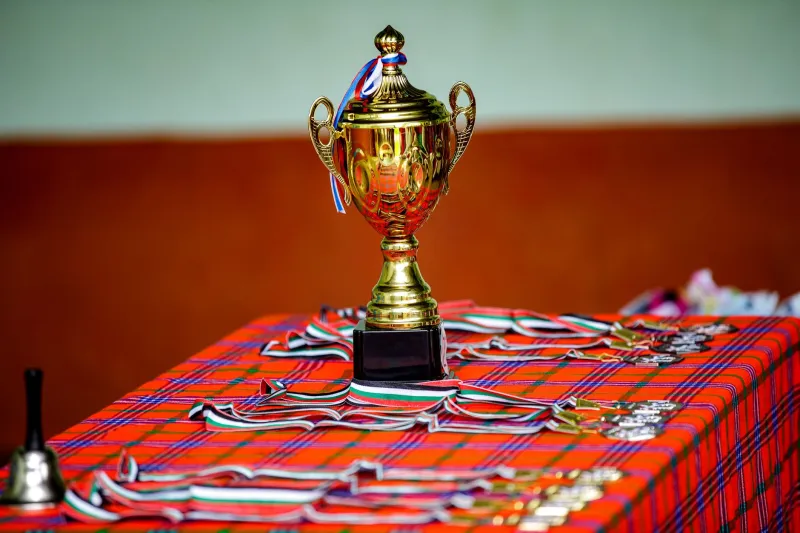
Somewhere in a Goodwill bin in Akron, Ohio, there is a small golden plastic trophy with a little soccer player on top, a nameplate that says "PARTICIPANT — Spring League 1994," and absolutely zero monetary value according to anyone who has ever appeared on Antiques Roadshow. It will be purchased by a 38-year-old within the week. She will put it on her bookshelf between a macramé plant hanger and a framed photo of herself at age seven looking deeply unimpressed by a birthday cake. It will become her favorite thing in the apartment.
This is not a joke. This is the market.
The Trophy Didn't Mean Nothing. You Were Just Told It Did.
Let's back up. The "participation trophy debate" has been a staple of American cultural hand-wringing since roughly the mid-2000s, when think-piece writers discovered they could generate enormous outrage by suggesting that giving children small plastic awards for existing was destroying the competitive spirit of an entire generation. Radio hosts weighed in. Coaches wrote op-eds. Your dad probably said something at Thanksgiving.
Except here's the thing nobody mentioned at the time: the kids who got those trophies didn't actually think they were winning anything. They knew. A seven-year-old standing on a soccer field in the August heat, having touched the ball maybe twice all season, is under no illusions about her athletic dominance. The trophy wasn't about achievement. It was about the season happening at all — about showing up every Saturday, about the orange slices at halftime, about the specific social contract of youth sports that said you were here and that counted for something.
Adults took one look at that and called it soft. Adults were wrong. Adults are now buying those trophies on eBay for twelve dollars a pop.
The Resale Market for Mediocrity Is Booming
If you haven't gone spelunking through Facebook Marketplace or your local thrift shop lately, allow us to paint you a picture. Participation ribbons — those long, colorful satin strips with a rosette on top and a foil-stamped word like "PARTICIPANT" or "SPORTSMANSHIP" — are showing up in home decor posts all over social media, draped over mirrors, pinned to bulletin boards, arranged in shadow boxes. "Most Improved" plaques are getting frames. Sixth-place ribbons are going in gallery walls next to actual art prints.
Some people hunt for trophies from their specific sport or era. Others collect by color, building elaborate rainbow arrangements that look like abstract textile art from twenty feet away and like a monument to recreational failure from two feet away. Either interpretation is correct. Both are the point.
Etsy has entire shops dedicated to vintage youth sports awards. Some sellers specialize in ribbons from the 1970s through the 1990s, when ribbon design reached a kind of peak baroque complexity — layers of satin, metallic fringe, little medallions dangling off the bottom like a participation chandelier. These are not going for nothing. People want them.
It's Not Irony. Stop Asking If It's Irony.
Here's where we have to be very clear, because the internet has a bad habit of flattening everything into a bit. This is not people buying participation trophies as a joke. This is not the same energy as buying a "World's Okayest Employee" mug from a gas station. The people doing this are not winking.
What's actually happening is something closer to reclamation. An entire generation was handed these objects, told by a chorus of adults that the objects were meaningless, and then watched those same objects get thrown away or donated or left to disintegrate in garage boxes. And now, twenty or thirty years later, those same people are adults with their own apartments and their own decorating budgets and their own opinions about what deserves to be displayed.
Turns out: the ribbon you got for swimming the length of the pool at day camp in 1991 deserves to be displayed. You swam the length of the pool. That was the whole thing. You did it.
Minor Accomplishments Are Still Accomplishments, Actually
There's a broader philosophical shift underneath all this trophy-hunting, and it's one that the Ugly Monkey Shop crowd has been living ahead of the curve on for a while now. The cultural obsession with peak performance — with being exceptional, with only celebrating the things that can be ranked first — has started to feel genuinely exhausting in a way that's hard to argue against.
People are tired. People ran a 5K and didn't win. People learned to make sourdough bread during a global pandemic and the bread was fine, not perfect, just bread. People showed up to the thing, did the thing, and went home. And somewhere along the way, it started to feel important to have a physical object that acknowledged the showing up — not the winning, just the presence.
The participation trophy, recontextualized, is basically a monument to the idea that existing within an experience is its own category of accomplishment. Which is either profoundly meaningful or completely unhinged depending on your perspective, and either way it looks great on a shelf.
How to Build Your Own Hall of Mediocrity
If you're now deeply inspired to start curating your own collection of minor achievement memorabilia — and why wouldn't you be — here's where to start:
Thrift stores are your first stop. Goodwill, Salvation Army, and independent shops get donations of old sports awards constantly, usually priced between fifty cents and three dollars. Go on weekdays when inventory is freshest.
eBay and Etsy have robust selections if you're looking for something specific — a particular sport, a particular decade, a particular shade of purple ribbon that matches your accent wall. Search terms like "vintage participation ribbon," "youth sports trophy lot," and "old award ribbon" will pull up more results than you expect.
Facebook Marketplace and estate sales are where the real hunting happens. Trophy lots from estate sales often include entire childhoods' worth of accumulated awards, and sellers frequently price them to move because nobody else is buying them. Yet.
As for display: shadow boxes work beautifully for ribbon collections. A simple floating shelf lets trophies stand in a row like an extremely humble little army. Gallery walls with a mix of ribbons, framed photos, and other memorabilia create something that functions as genuine autobiographical art, even if the autobiography includes a lot of fourth-place finishes in the hundred-meter backstroke.
The Trophy Was Always the Point
Your parents were wrong to throw yours away. Not catastrophically wrong — it was plastic, it was cheap, nobody was getting hurt. But they were wrong in the way that most generational dismissals are wrong: they saw the object and missed the meaning.
The meaning was that you were a kid who showed up somewhere on a Saturday and tried a thing and went home. That's most of life, actually. That's most of what any of us are doing on any given day. And if a small golden plastic figure on a fake marble base is what it takes to honor that — to put it on a shelf and look at it and think yeah, I was there, I did that, I got the ribbon — then frankly, it belongs in your home.
Buy the trophy. Put it somewhere you can see it. You participated. That counted for something. It always did.