Shrine On, You Crazy Diamond: The Sacred Art of Worshipping Entertainment That No Longer Exists
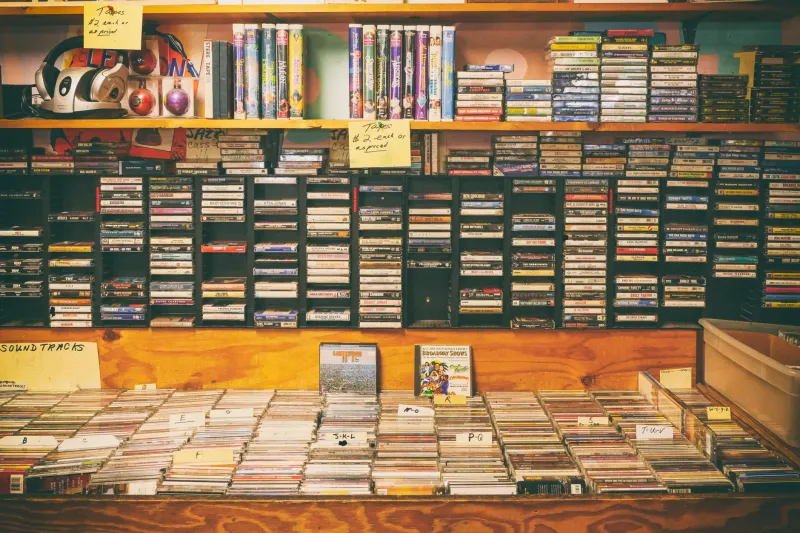
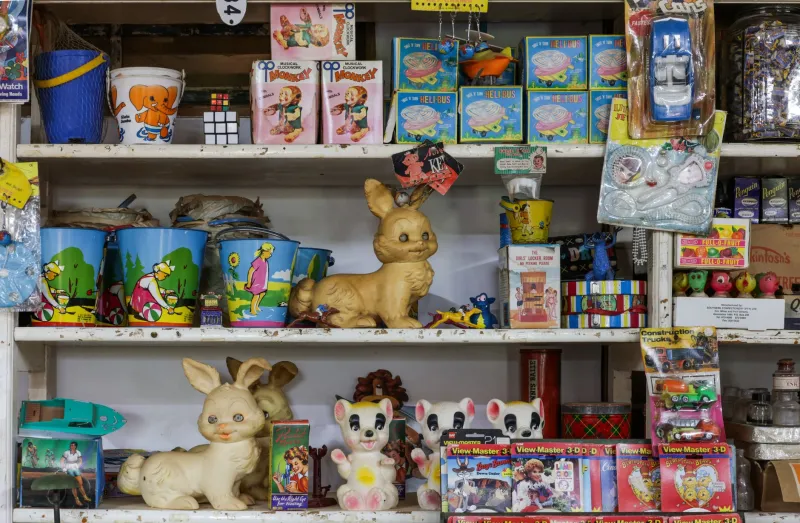
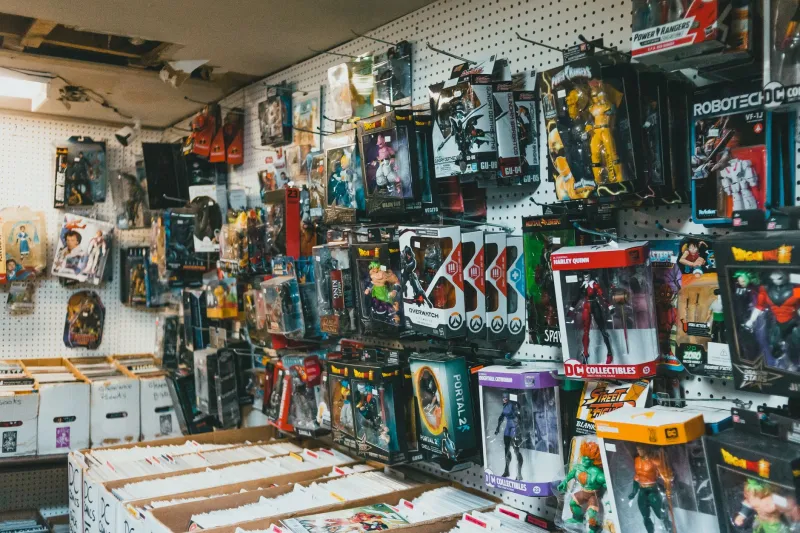
There's a corner of the internet — and honestly, a corner of a lot of American bedrooms — that looks like a museum curator had a complete breakdown and then did their best work. Funko Pops from a video game franchise that got cancelled in 2011. A hand-sewn quilt featuring characters from a Cartoon Network show that aired for exactly one season before being quietly murdered by the network. A framed print of a meme format so old that explaining it to a twenty-year-old would require a PowerPoint presentation and a glass of wine.
To the uninitiated, this stuff looks like clutter. To the people who built these shrines? It looks like home.
The Museum No One Asked For (But Everyone Needed)
Let's get something straight: a bedroom shrine to a dead franchise is not sad. It is, in fact, one of the most honest forms of self-expression available to a human being living in the year of our lord whenever-you're-reading-this.
Think about what a museum actually is. It's a building full of objects that someone decided were worth preserving — things that reflect who we were, what we valued, what made us feel something. The Smithsonian does it for nations. You do it for Invader Zim or Battleborn or that one weird Adult Swim show that ran at 4 a.m. and spoke directly to your soul.
The difference is that your museum is personal. The Smithsonian doesn't have a wing dedicated to the specific summer you discovered something that rewired your brain and made you feel less alone. You do. And it's sitting on three shelves above your desk, covered in limited-edition pins.
Why the Dead Stuff Hits Different
Psychologists who study parasocial relationships — the one-sided emotional bonds people form with fictional characters, celebrities, and media properties — have noted something interesting: the bond doesn't dissolve when the thing ends. If anything, it intensifies.
When a show gets cancelled, a game series gets abandoned, or a meme format finally dies, the people who loved it don't just move on. They become custodians. The franchise can't generate new content to dilute or complicate your relationship with it. What you have is what you have. It's frozen in amber. It's yours in a way that an ongoing IP can never quite be, because Disney isn't going to swoop in and reboot it into something unrecognizable.
There's a collector in Ohio — let's call her Marcy, because she asked us to — who has an entire room dedicated to Firefly. Not just the show, but the era of the show: the forums she frequented, the fan fiction she printed out and kept in binders, the specific grief of watching something brilliant get cancelled before it could disappoint you. "It never got bad," she told us. "It never had a bad season. It just stopped. So what I have is perfect. It's like it's still happening, just quietly, in this room."
That's not delusion. That's curation.
The Velocity Problem
Here's the part where we get a little philosophical, and we promise it won't hurt.
Corporate entertainment in America currently moves at a speed that is genuinely hostile to human emotional processing. A new cinematic universe drops every fiscal quarter. Streaming platforms generate content faster than anyone can watch it, then cancel half of it before the second season. Meme formats live and die in seventy-two-hour cycles. The whole machine is designed to keep you consuming, not connecting.
In that context, the person who stops the clock — who says this thing mattered to me and I'm going to build a physical monument to that fact — is doing something almost radical. They're opting out of the conveyor belt. They're insisting that their emotional response to a piece of entertainment is worth preserving, even when the entertainment industry has already moved seventeen product cycles past it.
The shrine is, in its weird and wonderful way, an act of resistance.
What the Objects Actually Say
Collectors of zombie media — our term of endearment, not an insult — tend to be remarkably self-aware about what their collections represent. Ask someone why they have a complete set of Shadow of the Eternals concept art prints (a game that was never actually finished, for the uninitiated), and they won't just say "because I liked it." They'll tell you about who they were when they first heard about it. They'll tell you about the community they found. They'll tell you what the aesthetic of the thing said about their values, their sense of humor, their taste.
The objects are a code. The collection is the decoder ring.
This is why the Ugly Monkey Shop exists, by the way. Not just to sell you weird stuff — though we absolutely will do that — but because we understand that the weird stuff means something. The novelty item on your shelf isn't just a novelty item. It's a data point in the ongoing autobiography you're writing with your purchases, your obsessions, and your willingness to dedicate shelf space to something the rest of the world has forgotten.
A Defense of the Unhinged Museum
If someone walks into your room and sees your shrine to a cancelled video game or a dead meme or a TV show that got axed in 2007 and immediately asks "why do you still have all this stuff," here is a complete and total answer:
Because it mattered. Because it still matters. Because the fact that a corporation stopped making it doesn't erase what it did to your brain and your heart when you first encountered it. Because memory is physical, and objects are how humans have always externalized their inner lives, from cave paintings to baseball cards to hand-painted Firefly quilt squares.
Also, because it looks incredible and anyone who doesn't get it can see themselves out.
Your bedroom shrine isn't a symptom. It's a statement. It's the most accurate portrait of you that exists anywhere in the world — more honest than your LinkedIn, more specific than your Instagram, more revealing than anything you've ever said out loud.
Keep building it. Keep adding to it. And if anyone gives you grief, just tell them the museum is closed to the public today.