Your Decor Is Staring at You and It Has Opinions
Most people decorate their homes to create a feeling of warmth and safety. Neutral tones, soft lighting, maybe a succulent that hasn't died yet. It's fine. It's perfectly fine. It communicates nothing about the person who lives there and offends absolutely no one, which is precisely the problem.
Then there's the other kind of person. The one with the ceramic Victorian child figurine on the mantle whose eyes follow you across the room. The one with the taxidermied fox mounted at eye level, its face frozen in an expression that reads less like "noble woodland creature" and more like "I know what you did." The one whose collection of vintage baby dolls from the 1960s makes every houseguest quietly reconsider whether they parked close enough to the exit.
These people are not trying to scare you. They are, however, completely unbothered if they do.
The Object That Looks Back
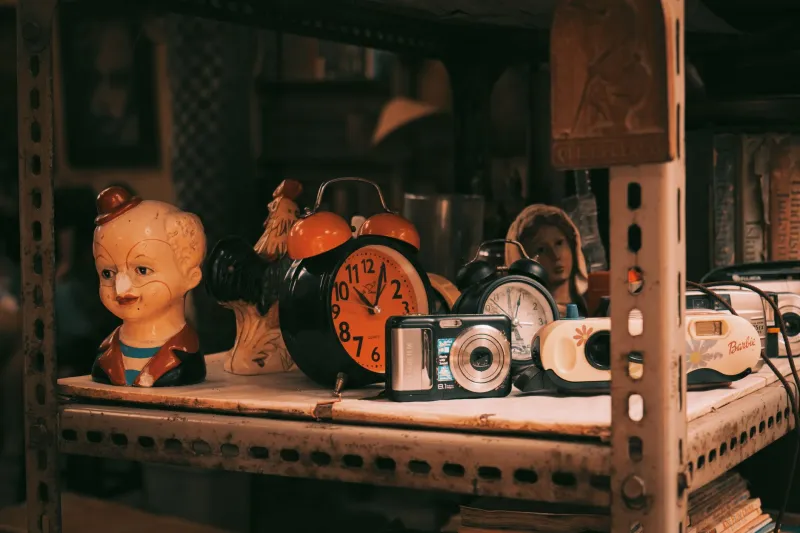
There's a specific category of collectible that has been quietly exploding in popularity over the last several years, and it lives entirely in the uncomfortable space between art object and psychological challenge. Taxidermied animals posed in human situations. Porcelain figurines with one too many teeth. Antique dolls with replaced glass eyes that don't quite match. Ceramic clowns from estate sales that appear to be laughing at something they're not sharing.
None of these things are supposed to be in your living room. That's exactly why they are.
Collectors who specialize in what might loosely be called "confrontational decor" describe a very specific thrill in finding the right piece. It's not about horror for its own sake. It's about locating an object that has genuine personality — usually a personality that is deeply, specifically wrong — and bringing it home to live with you permanently. The unsettling quality isn't a bug. It is the entire feature.
Discomfort as Design Philosophy
Here's the thing about decorating with objects that make people uneasy: it requires a level of confidence that matching furniture sets simply do not. Hanging a gallery wall of tasteful botanical prints says "I watched some home renovation content and made reasonable choices." Displaying a collection of antique medical illustrations next to a taxidermied rabbit posed mid-tea-party says something considerably more specific about who you are and what you find interesting.
It also functions as a remarkably efficient social filter. Anyone who walks into your space and immediately relaxes is probably someone worth keeping around. Anyone who spends the entire visit angled toward the door is maybe not your people, and now you know that within the first three minutes of their arrival. The creepy ceramic figurine has done you a genuine social service.
Psychologists who study the relationship between personal space and identity will tell you that the objects we choose to live with are a form of self-narration — we're constantly telling a story about ourselves through what we keep and display. Most people tell a very safe story. Comfortable furniture. Family photos. Maybe a travel souvenir or two. The collectors who lean into the unsettling are telling a story with a lot more texture, and honestly, it's a more interesting read.
The Taxonomy of Things That Are Wrong
Not all confrontational decor is created equal, and serious collectors will tell you there are important distinctions to understand.
First, there's the accidentally unsettling — vintage objects that were completely normal in their original context and have simply aged into wrongness. Those wide-eyed ceramic children from the 1970s weren't supposed to be creepy. They were meant to be charming. Time and shifting aesthetic standards have transformed them into something that now lives permanently in the uncanny valley, and that transformation is a huge part of their appeal. You're not just buying an object; you're buying about fifty years of cultural drift.
Then there's the deliberately wrong — contemporary pieces made specifically to subvert expectations. Taxidermied animals posed in formal portraiture. Stuffed creatures with human glass eyes. Resin figurines that look almost like something you'd find at a craft fair, except one detail is specifically, intentionally off. These pieces require an artist who understands exactly where the line of comfort sits and has chosen to stand slightly past it.
Finally, there's the contextually unsettling — objects that are only disturbing because of where they are and how many of them exist in one place. A single vintage doll is a collectible. Forty vintage dolls arranged by height in a dedicated display case is a commitment to a specific vision that your guests will remember for the rest of their lives.
Why the Best Collections Make You Want to Look Away (But You Can't)
There's a neurological reason that unsettling objects are hard to ignore. The human brain is wired to pay close attention to things that don't quite fit pattern expectations — faces that are almost right but not quite, expressions that don't match their context, proportions that are slightly off. These things trigger a low-level alert response that keeps your attention locked even when the rational part of your brain is suggesting you look at literally anything else.
Collectors who specialize in this stuff have essentially turned that neurological quirk into an interior design principle. Their spaces are impossible to be bored in. Every corner has something that demands another look, another read, another attempt to figure out exactly what it is about that particular ceramic spaniel that makes it feel like it's judging your life choices.
The answer, for the record, is always the eyes.
Owning the Stare
What ultimately separates the person who collects confrontational objects from someone who just ended up with one weird thing they don't know what to do with is intentionality. The best collections in this space have a point of view. They're curated, even when they look chaotic. They tell you something specific about the person who assembled them — usually that this person has a high tolerance for ambiguity, a genuine appreciation for the weird, and absolutely zero interest in making their home feel like a hotel lobby.
There's a reason the Ugly Monkey Shop exists. It's the same reason these collections exist. Some of us are just not built for the tasteful and the inoffensive. We want objects with personality, even when — especially when — that personality is a little bit much.
The taxidermied squirrel on the bookshelf is not there to scare you. It's there because the person who put it there looked at it in a shop somewhere and thought: yes, this one understands me.
And the squirrel, for its part, appears to agree.