Dropping the Bit: How Millennials Stopped Pretending to Love Things Ironically and Just Started Actually Loving Them
Somewhere around 2023, something cracked open in the collective millennial chest cavity. It wasn't a breakdown, exactly. It was more like a confession. People who had spent fifteen years insisting they only watched The Bachelor "for the chaos" started admitting they genuinely cared who got the final rose. Grown adults with mortgages and complicated feelings about their 401(k)s were openly weeping at the Backstreet Boys documentary. And crucially — crucially — nobody was adding "lol" at the end of their feelings anymore.
The irony shield is down. And honestly? It looks better this way.
The Bit That Went On Too Long
To understand why this shift feels so seismic, you have to understand what millennials were doing before. The generation that came of age during the early internet developed a very specific survival skill: pre-emptive self-mockery. If you made fun of yourself first — if you called your Lizzie McGuire obsession "a whole thing" with a knowing smirk — nobody could hurt you. The embarrassment was neutralized. The love was real, but it wore a costume.
This was especially true for anything coded as uncool by the cultural gatekeepers of the late '90s and early 2000s. Boy bands. Reality TV competitions. Dragon Ball Z merchandise. Collecting Beanie Babies with the tags still attached. You loved these things with your entire heart, and then you learned — from older siblings, from music magazines, from the general vibe of the internet — that loving them made you a mark. So you retrofitted the love with a layer of self-awareness so thick it basically became a separate personality.
The problem is that performing detachment is exhausting. And it turns out that when you spend enough years pretending to be above something, you start to lose access to the actual joy underneath.
What Finally Broke the Dam
A few things happened in quick succession that made sincerity feel survivable again.
First, the pandemic. Nothing strips away performative cool like two years of genuine existential uncertainty. When you're stress-rewatching Gilmore Girls at 2 a.m. because it's the only thing that makes you feel like the world isn't ending, you stop having the bandwidth to pretend you're doing it ironically. You're doing it because Lorelai Gilmore's voice is a warm blanket and you needed a warm blanket. That's the whole story.
Second, the algorithmic era made niche obsession visible at scale. When you discovered that ten thousand other people had a Degrassi podcast, or that there was an entire TikTok community dedicated to ranking early-2000s reality TV contestants by how much they deserved better, the embarrassment calculus changed. It's a lot harder to feel ashamed of something when you can immediately find your people.
Third — and maybe most importantly — millennials got old enough to stop caring. There's a specific kind of freedom that arrives somewhere in your mid-thirties when you realize that the people whose opinions you were protecting yourself from in 2004 are now also just tired adults with back problems. The social hierarchy that made NSYNC fandom embarrassing dissolved. What's left is just the music, and the music slaps, and you know it.
The Collector Who Stopped Apologizing
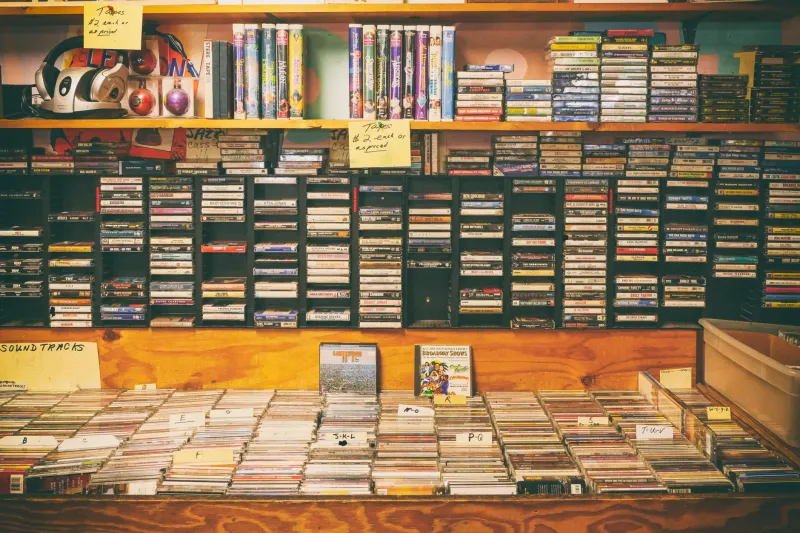
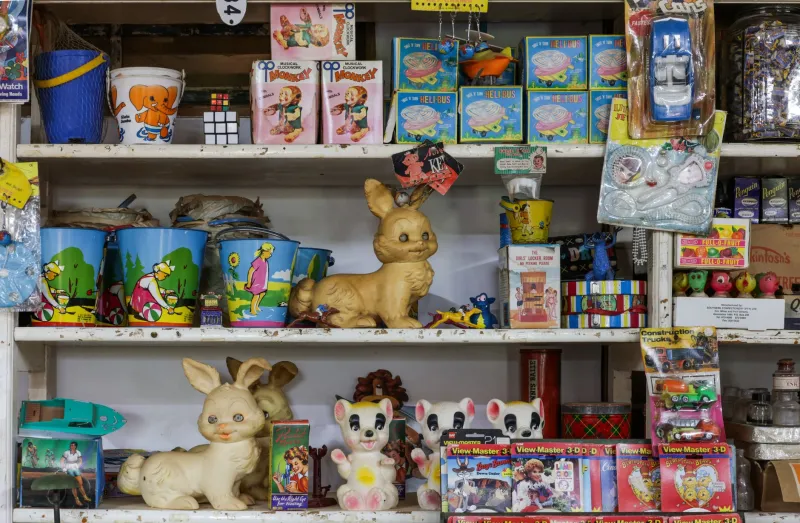
Talk to anyone who collects earnestly — vintage Power Rangers figures, complete sets of early McDonald's Happy Meal toys, every edition of a particular YA series from 2003 — and you'll hear a version of the same story. There was a phase of hiding it. Then a phase of joking about it. Then, eventually, a phase of just... not doing either.
"I used to introduce my collection as a 'bit,'" says one collector who runs an online community dedicated to early-2000s teen pop ephemera. "Like, 'Oh yeah, I have a room full of TRL memorabilia, isn't that wild." And then at some point I was like — why am I doing the air quotes? I just love this stuff. I loved it when I was eleven and I love it now and that's a complete sentence."
This is the energy driving a new wave of unguarded fandom. People are getting *NSYNC tattoos without the winking disclaimer. They're framing their old Sailor Moon posters as actual art, not as "camp." They're buying the merch — the real merch, the stuff that says I love this without any protective layer of self-aware humor — and displaying it without explanation.
Vulnerability Is the New Flex
Here's the thing that nobody warned millennials about: genuine enthusiasm is magnetic. When someone tells you they love something without hedging, without the smirk, without the preemptive self-roast, it's actually more compelling than the detached version. It invites you in instead of keeping you at arm's length.
The irony-as-armor approach made a certain kind of sense when the internet was smaller and cruelty traveled fast. But the cultural moment has shifted. Authenticity isn't naïve anymore — it's a choice, and a somewhat courageous one. Saying "I genuinely love this embarrassing thing" in a world full of people still performing coolness is its own kind of statement.
And look, this doesn't mean the humor disappears. The best version of this energy is people who love something and can laugh at it — not to protect themselves, but because they're comfortable enough to hold both things at once. You can think the Spice Girls movie is objectively chaotic and also have it mean something real to you. Those aren't contradictions. That's just being a person.
What This Means for the Stuff You Buy
The market has noticed. The nostalgia merchandise economy has exploded precisely because people are finally willing to spend real money on things they genuinely love rather than things they love "ironically." There's a difference between buying a Tamagotchi as a gag gift and buying one because you want it on your desk. The second transaction requires more honesty. It also tends to result in purchases you actually cherish.
At Ugly Monkey Shop, we've always believed that the weirdest, most personal stuff is also the most meaningful stuff. The merch that makes your friends go "wait, you actually like that?" is almost always the merch that says the most true thing about you. Ugly, earnest, specific, unashamed — that's not a bug in the personality. That's the whole feature.
So if you've been carrying around a twenty-year-old love for something that the culture told you was embarrassing: welcome to the other side. The bit is over. The feeling was real the whole time.