Hoard It Proudly: How Your Weirdest Collection Is Actually Your Whole Personality
Let's get one thing straight before we go any further: you are not a hoarder. Hoarders don't curate. Hoarders don't have a spreadsheet tracking the mint-condition status of every regional variant of a 1987 Burger King Alf hand puppet. What you are — what we all are here at Ugly Monkey Shop — is a collector. And more specifically, you are the proud owner of a hyper-specific, deeply personal, possibly inexplicable obsession that functions as your actual soul made tangible.
You're welcome. Now let's talk about it.
The Brain Science of "Why Do I Own Forty Ceramic Frogs?"
Psychologists have a term for the emotional pull of collecting: it's called object-based identity formation, which sounds like something you'd read in a grad school thesis but basically means that humans have always defined themselves through their stuff. Ancient Romans collected Greek statues. Victorian ladies collected pressed flowers and human hair. Your uncle collects commemorative NASCAR plates. The instinct is the same; only the subject matter changes.
What makes niche collecting particularly powerful is specificity. There's a version of you that collects "vintage toys" — fine, sure, respectable. But there's a much more interesting version of you that collects only the discontinued regional mascot merchandise from regional grocery store chains that went bankrupt before 1995. That version of you has a story. That version of you has opinions. People remember that version of you at parties, mostly because they have no idea what to say but are genuinely fascinated.
The tighter the niche, the louder the personality signal. Think of it as a frequency. Generic collections broadcast on AM radio. Hyper-specific collections are pirate radio stations transmitting at 3 a.m. from a converted van. Only the right people will find you — and when they do, it's electric.
The Taxonomy of Weird Stuff Worth Owning
Not all odd collections are created equal, so let's break down the ecosystem:
The Nostalgic Artifact Collector — This person's shelves are lined with vintage lunch boxes, cereal box prizes, and Happy Meal toys still in the bag. Every piece is a time capsule. Every piece is also, frankly, a little sticky-looking even when it's completely clean. These collectors are usually warm, sentimental, and devastatingly good at trivia nights.
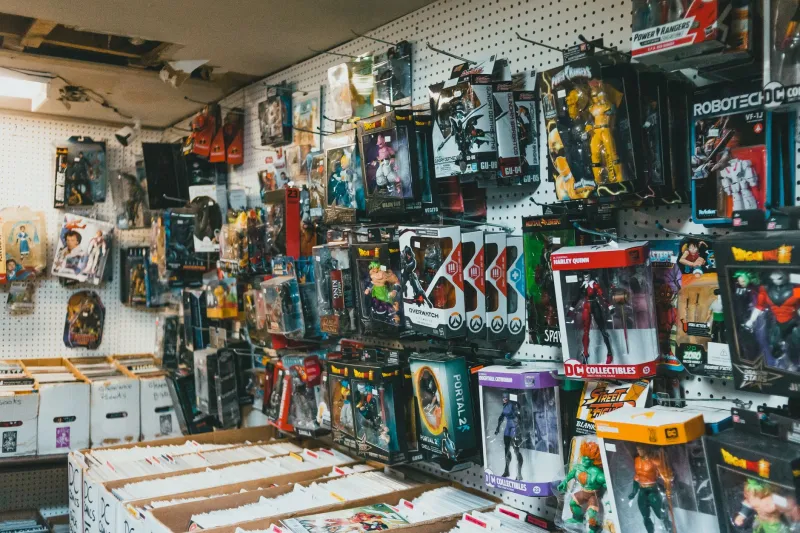
The Obscure Action Figure Devotee — They're not collecting Spider-Man. They're collecting the 1994 Toxic Crusaders line, the bootleg Brazilian GI Joe knockoffs, or the single-wave-wonder figures from a toy line canceled after two months. These are the collectors who find treasure at estate sales while everyone else is buying end tables.
The Functional Oddity Hoarder — Salt and pepper shakers shaped like teeth. Spoon rests that look like minor deities. These collections live in the kitchen and confuse every houseguest in exactly the right way.
The Pop Culture Completionist — They own every variation of a thing from a single franchise: every McDonald's Monopoly piece ever printed, every regional Funko Pop exclusive, every tie-in product from a movie that came out in 2003 and nobody saw. The dedication is staggering. The storage situation is precarious.
Whichever category you fall into — and you probably straddle at least two — know this: your collection is a self-portrait. A weird, possibly dusty, extremely specific self-portrait.
Displaying Your Chaos Without Destroying Your Relationships
Here's where it gets practical, because some of us do share living spaces with people who did not sign up to cohabitate with a complete set of knockoff Ninja Turtles from a 1991 flea market in Ohio.
Commit to a dedicated display zone. The key to living harmoniously with your collection — and with other humans — is containment with intention. One wall. One room. One spectacular shelving unit that makes a statement instead of looking like a storage problem. Float shelves, shadow boxes, and glass-front cabinets all transform "pile of weird stuff" into "curated installation."
Let the weirdest pieces be the conversation starters. Don't hide your strangest acquisitions in the back. Put them front and center. The ceramic clown bank with the unsettling smile should be the first thing people see. Own it. Explain it. Watch your guests decide whether they love you or fear you. Either reaction is a win.
Label nothing. Explain everything. If someone asks about the limited-edition promotional figurine from a 1998 Kentucky Fried Chicken campaign in Canada, tell them the whole story. Enthusiasm is magnetic. People who didn't care about regional fast food mascots five minutes ago will absolutely care once you've explained the lore with appropriate passion.
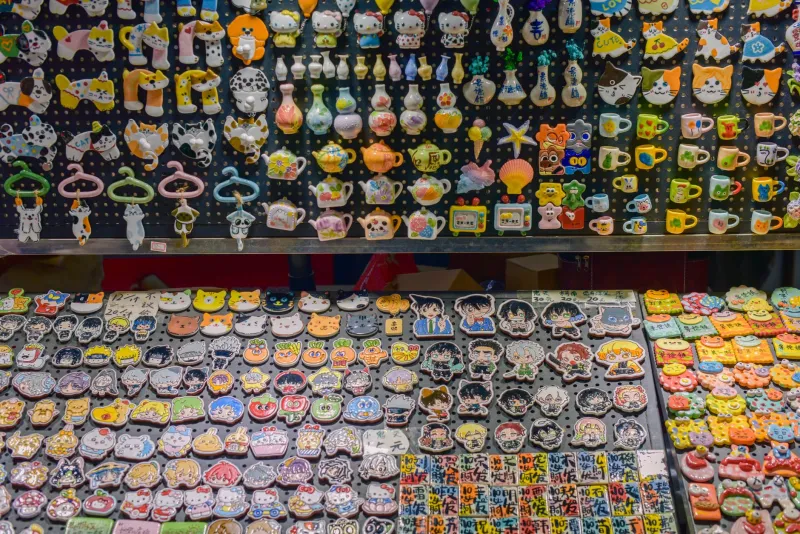
For roommates specifically: bring them a small weird gift early in the relationship. Something from your world. A weird little pin. A novelty keychain. You're not bribing them — you're initiating them. Make them complicit in the vibe.
Why the Weirdo Always Wins
Here's the thing about people who collect strange and specific things: they are, almost universally, the most interesting people in any room. Not because of the objects themselves, but because of what the objects represent — sustained attention, genuine passion, and a refusal to pretend that mainstream taste is the only valid option.
In a culture that increasingly rewards authenticity, the person with a wall of vintage cheese-related advertising memorabilia is winning. They know exactly who they are. They've built a physical archive of their own enthusiasms. They've found their people — because the internet has made it possible to find literally any community, no matter how specific the shared obsession.
At Ugly Monkey Shop, we believe weird stuff for wonderful weirdos isn't just a slogan — it's a philosophy. Your collection isn't clutter. It's character. It's autobiography. It's the most honest thing about you displayed in three dimensions.
So go ahead. Buy the thing. Put it on the shelf. Tell everyone about it.
You are, as they say, built different. And your collection proves it.