You Don't Get It and That's the Whole Point: Inside the Glorious Chaos of Hyper-Niche Fan Merch
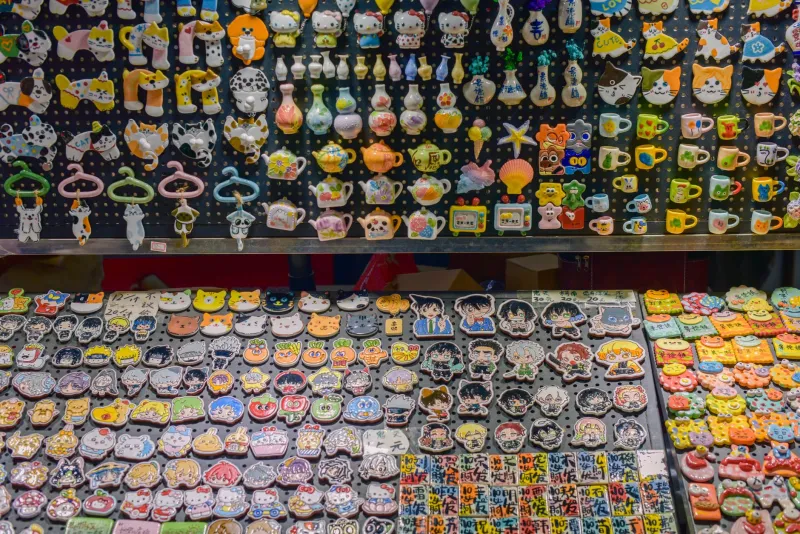
Somewhere right now, someone is paying $38 for an enamel pin of a background character from a 2009 anime that aired for exactly one season. They are not embarrassed. They are thriving. This is the world of hyper-niche fan merchandise, and it is one of the most wonderfully unhinged corners of the American consumer economy.
Welcome to our house. Pull up a chair. We made pins.
The Mainstream Can't Touch This
Let's be clear about something: official licensed merchandise is fine. Your Hot Topic band tees and your Disney-branded everything serve a purpose. But there's a ceiling to what major studios and corporate licensing departments will greenlight. They're going for volume — broad appeal, safe bets, characters that 10 million people recognize.
What they will never, ever make is a refrigerator magnet of the third background fish from the left in a specific scene of Ponyo. They will not produce a coffee mug featuring an extremely obscure quote from season four of Arrested Development that only lands if you've seen the episode three times. They absolutely will not manufacture a tote bag celebrating the deeply weird 2003 video game Katamari Damacy in the year 2024.
But indie makers will. Indie makers absolutely will, and they'll sell out in 48 hours.
The Etsy-to-Convention Pipeline
The infrastructure for hyper-niche merch has been quietly assembling itself for over a decade, and it runs on three main pillars: Etsy, artist alley tables at conventions, and the kind of parasocial community energy that only exists in fandoms where everyone knows everyone.
Etsy alone hosts tens of thousands of small-batch fan artists selling everything from Gravity Falls sticker sets to handmade Twin Peaks cross-stitch kits. The platform's hands-off approach to fan art (operating in a legal gray area that everyone involved has mutually agreed to pretend is fine) has made it the default marketplace for creators who want to turn their extremely specific hyperfixation into a side hustle.
"I started making enamel pins of obscure Jojo's Bizarre Adventure characters because I couldn't find them anywhere," says Priya Nair, who runs an Etsy shop called Bizarre Baubles out of Portland, Oregon. "I figured if I wanted them, other people did too. My first run of 50 pins sold out in a weekend. Now I do drops of 200 and they're gone in a day."
The convention circuit adds another layer. At events like Anime Expo, San Diego Comic-Con, and the dozens of regional cons that dot the US calendar, artist alley is essentially a living catalog of everything the official merchandise booths refuse to acknowledge exists. Want a pin of a villain from a manga that never got an anime adaptation? Artist alley. Need a print of two characters from a game that came out in 2006 that you and six of your online friends are still emotionally processing? Artist alley has you covered.
A Listicle of Glory: The Greatest Hyper-Niche Merch Categories Right Now
1. The "Second Tier Character" Pin The enamel pin market has reached a level of specificity that borders on performance art. We're not talking about the protagonist. We're talking about the protagonist's roommate's cat. The villain's henchman who had three lines. The NPC that modders turned into a meme. If a character exists and has at least 1,000 devoted fans, someone has made a pin of them.
2. The Extremely Specific Quote Mug Not a famous quote. Not an iconic line. A weird, mid-episode throwaway line that became an in-joke for 800 people on a Discord server. These mugs function as litmus tests — if someone sees it and laughs, you have found your people.
3. Cult TV Show Collectibles Shows like Firefly, Pushing Daisies, Hannibal, and Freaks and Geeks — all cancelled before their time, all with fandoms that have never forgiven the universe — generate an astonishing volume of fan-made merch. It's grief merchandise, basically. Beautiful, weird grief merchandise.
4. The Obscure Anime Deep Cut Mainstream anime merch is everywhere. But the real flex is the enamel pin of a character from a 12-episode 2011 anime that currently has a 7.8 on MyAnimeList and a subreddit with 4,000 members who all know each other by name. That's community. That's culture.
5. Video Game Villain Merch The villain always gets shafted in official merch. Fan makers fix this. There is a thriving market for beautifully designed goods celebrating antagonists who were objectively more interesting than the hero and the fandom knows it.
Why This Economy Works (And Why It's Beautiful)
The hyper-niche merch economy functions because it's built on genuine love rather than market research. When a corporate licensing team greenlights a product, they're asking "how many people will buy this?" When a fan artist makes a run of 75 enamel pins of a background character, they're asking "how many people love this as much as I do?"
Those are profoundly different questions, and they produce profoundly different products.
There's also a community function happening here that goes beyond commerce. Owning a piece of hyper-niche merch is a signal. It says: I found the thing. I went deep enough into this particular rabbit hole that I emerged on the other side with a lapel pin and a sense of belonging. You can't fake that. You can't stumble into it. It requires genuine investment.
And in an era when everything is optimized for mass appeal and algorithmic reach, there is something genuinely countercultural about buying a $12 sticker that 99% of people will never understand.
We See You, Weirdos
Here at Ugly Monkey Shop, we built this whole thing on the premise that the best customers are the ones who've already decided they don't need anyone else's approval for their taste. The person who buys a hyper-specific fandom pin isn't shopping for validation. They're shopping for joy, for community, for the little thrill of finding the exact weird thing they didn't know existed until they saw it.
That's the whole game. That's all of it.
The underground economy of niche fan merch isn't underground anymore — it's a multi-million dollar ecosystem of small creators, passionate collectors, and the kind of dedicated fandom energy that makes the internet worth having. And it's only getting more specific, more elaborate, and more wonderfully, defiantly weird.
We wouldn't have it any other way.