Sold Out and Sold Off: When Your Obscure Obsession Goes Mainstream and Ruins Everything
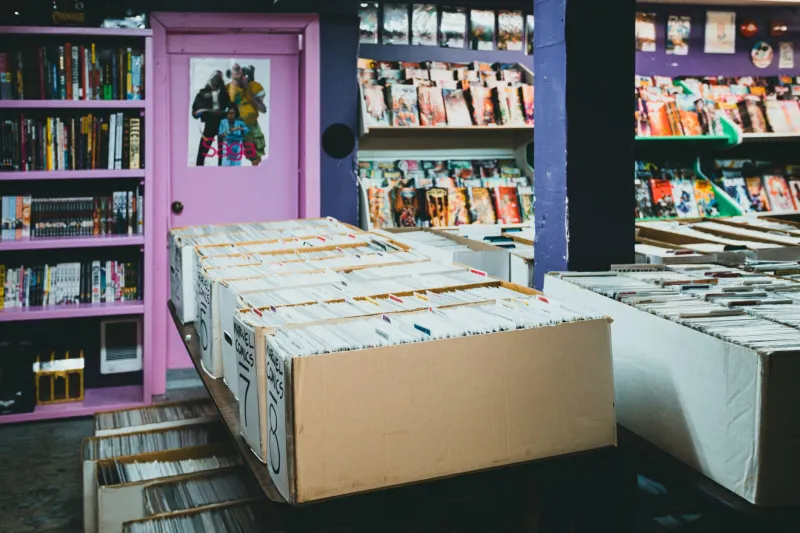
Somewhere right now, a person is standing in the middle of a Hot Topic — or a Walmart end cap, or a very well-lit Etsy storefront — staring at something they used to own before anyone else cared, and they are feeling absolutely nothing good about it.
This is the crossover moment. The big one. The cultural inflection point where a niche interest stops being a secret handshake and becomes a lanyard at a convention center in Anaheim. It happens to every weird thing eventually. The only question is when — and whether you'll still love it on the other side.
The Lifecycle of a Beautiful Obscure Thing
Here's how it goes, every single time. Someone — usually a teenager with too much internet access and too little social capital in the traditional sense — discovers something deeply specific. A forgotten anime. A regional fast food chain with a cult following. A particular strain of mid-century ceramic figurines that look vaguely threatening. They love it with their whole chest. They find three other people who love it. They build a small, weird, fiercely devoted community around it.
Then a content creator posts about it. Then a bigger content creator reposts that. Then a brand account makes a joke referencing it. Then a celebrity is photographed wearing a shirt. Then it's a collab. Then it's everywhere. Then it's nothing.
Michelle Okafor, a Chicago-based collector who spent the better part of a decade hunting down original Garbage Pail Kids variations before the secondary market exploded, describes the feeling with uncomfortable precision. "It's like watching your hometown get discovered," she says. "At first you're proud because you always knew it was special. Then the rents go up and all the places you loved close, and you're just standing there like — this is my fault, somehow."
It is not her fault. But the feeling tracks.
The TikTok Acceleration Problem
What's different now — and this matters — is the speed. Pre-social media, a niche could go from underground to overground over the course of years. Enough time for the original weirdos to adjust, maybe even profit a little, definitely grieve a lot. The transition had texture.
Now a single 47-second video can detonate an entire subculture's sense of identity in the time it takes to eat lunch. Cottagecore. Dark academia. Goblincore. Frogcore. Each one started as a genuine aesthetic built by specific people with specific references, and each one became a Pinterest board category within what felt like fifteen minutes.
Dave Rennick, who runs a small online zine about obsolete video game peripherals and has been doing it since before that was a thing people did, watched his corner of the internet get "discovered" twice in three years. "The first time, I was kind of flattered," he admits. "The second time, I watched someone with two million followers explain my hobby to their audience and get three facts wrong, and the comments were like 'this is so niche and cool' and I just — I closed the laptop. I went outside."
The facts being wrong is almost the worst part. Mainstream adoption doesn't just dilute a niche — it frequently misunderstands it, sanding off the specific edges that made it interesting in the first place.
So Who Actually Wins?
Here's the uncomfortable truth that nobody in the originalist camp wants to hear: some people make out great when their weird thing blows up. The early collectors who bought in before the hype see their holdings appreciate. The small creators who were already making content get algorithmic lifts. The craftspeople who were hand-making the merch before there was a licensed version suddenly have a market they never had to build.
Janelle Torres started making hand-sewn plush versions of obscure cryptids — not Bigfoot, not the Loch Ness Monster, the genuinely regional ones that only locals know — out of her apartment in Tucson. For two years, she sold maybe forty units. Then a certain aesthetic exploded across social platforms, cryptid content started performing, and she sold out of everything she had in a weekend. "I'm not going to pretend that was bad," she says, laughing. "I cried. I bought a better sewing machine. I hired my cousin."
The grief and the windfall can coexist. They frequently do.
What's Next on the Conveyor Belt
If you want to get ahead of the curve — or if you want to love something weird for as long as possible before the algorithm finds it — here are a few categories currently sitting in that delicious pre-explosion limbo.
Vintage infomercial culture. The people who genuinely, non-ironically collect original ShamWow merchandise and Ronco Rotisserie documentation are onto something that feels very close to tipping. The nostalgia cycle is about due.
Regional theme park ephemera. Not Disney. Not Universal. The parks that closed in 1994 and left behind brochures, branded cups, and deeply unsettling mascot costumes. This one has "documentary series" written all over it.
Instructional VHS tapes. Specifically the ones for hobbies that no longer exist or were never popular to begin with. There are whole communities built around these. The aesthetic is extremely close to breaking through.
Fast food promotional toys from the late '80s and early '90s. Already heating up. If you have a complete set of anything from a Hardee's promotion, hold onto it.
The Real Question Nobody Wants to Answer
At some point, every person who loves a weird thing has to decide what they're actually attached to: the thing itself, or being the person who loved it before. These are not the same. One of them survives the crossover moment. The other one doesn't, can't, and maybe shouldn't.
The collectors who stay — who keep buying the ceramic figurines even after they show up on Urban Outfitters' website, who keep watching the obscure anime even after it gets a Netflix adaptation — those people figured something out. The love wasn't about exclusivity. It was just love.
Everybody else is going to have to find the next weird thing and start the clock over.
For what it's worth, the ugly monkey has always been there first. That's not a flex. It's just a fact about monkeys.