Somebody Is Getting Paid to Open Boxes and You're Watching It Happen
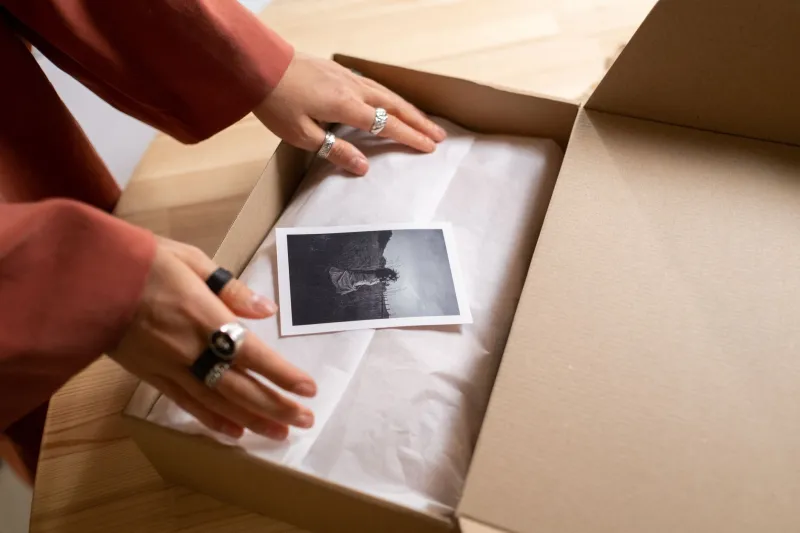
Let's just say it out loud, together, like adults: you have watched a stranger open a package on the internet. Maybe it was a mystery box stuffed with anime figures. Maybe it was a haul video from someone who absolutely did not need seventeen items from a fast-fashion app. Maybe it was a guy in a warehouse carefully slicing tape off a vintage action figure while whispering like he was performing surgery. Whatever the specific flavor, you watched. You probably watched more than one. And somewhere in the middle of it, you felt something. Something warm. Something almost like anticipation, even though the box wasn't yours and you weren't getting anything.
Welcome to the Unboxing Industrial Complex. Population: everyone with a phone and a lunch break.
It Started Innocent and Then Got Wildly Out of Hand
The first unboxing video on YouTube is generally credited to a 2006 upload of someone revealing a Nokia phone, and it has roughly the production value of a Bigfoot sighting. Shaky. Grainy. Barely audible. And yet, something in it worked. People watched. People commented. People asked for more.
Fast forward to today and the unboxing genre has metastasized into something that would have been completely incomprehensible to a person living in 2003. There are unboxing channels with subscriber counts in the tens of millions. There are children's unboxing creators who have generated more revenue than most regional banks. There are entire YouTube empires built on one singular skill: opening things while a camera rolls. The content is exactly what it sounds like. The audience is enormous. The money is real.
And the rest of us are just sitting here watching, wondering how we didn't think of this first.
Your Brain Is Being Played Like a Cheap Kazoo
Here's the uncomfortable part — the reason unboxing works isn't because we're all secretly shallow consumption-obsessed zombies (well, not entirely). It's because the human brain is genuinely, helplessly wired for anticipation. The neurological response to almost knowing something is more potent than the response to actually knowing it. Dopamine spikes in anticipation of a reward, not necessarily at the reward itself. Which means watching someone peel back tissue paper from a mystery item delivers a little hit of the good stuff even when you're not the one doing the peeling.
It's the same mechanism behind scratch tickets, slot machines, and the agonizing final seconds of a reveal show. The box is closed. The box is opening. The box is — what is it — the box is open. Your brain doesn't particularly care that the hands in the frame aren't yours. It's along for the ride regardless.
Unboxing creators figured this out, consciously or not, and built their entire format around milking that anticipation for every possible second. The slow peel. The dramatic pause. The "oh wow" face. It's theater. Cheap, cardboard-scented theater that your dopamine system cannot resist.
The Rise of the Cardboard Celebrity
What's genuinely strange about the unboxing economy is the kind of celebrity it produces. These aren't people who can act, sing, write, or perform any traditional entertainment skill. They are people who are good at being excited about stuff in a way that reads as authentic on camera. That's the whole job. Enthusiasm, delivered convincingly, at scale.
And it works because authenticity — or the convincing performance of it — is the scarcest resource on the internet. When a creator tears open a mystery collectibles box and genuinely loses their mind over a rare variant figure, that reaction lands differently than a polished commercial. It feels like watching your friend get excited. It feels personal. It feels like being in the room.
Some of these creators have turned that feeling into full-blown media empires. Haul culture, which is unboxing's slightly more chaotic cousin, has produced its own micro-celebrity class — people who buy a hundred dollars' worth of weird stuff from discount sites and walk you through every single item with the gravitas of a museum curator. Their audience doesn't just watch. They comment, they request, they vote on future hauls. It's participatory in a way traditional entertainment never was.
The Haul as Mirror
There's a reason haul culture specifically exploded around the same time that fast, cheap online retail became accessible to basically everyone with a debit card. Watching someone else's haul is, in a very real sense, vicarious shopping. You get the entertainment of the reveal without the financial damage. You get to evaluate the items, form opinions, feel the small thrill of discovery — all without contributing to your own pile of things you definitely didn't need.
It's window shopping at the speed of the algorithm. And it scratches an itch that traditional advertising never quite reached, because the haul creator isn't trying to sell you anything. They already bought the stuff. They're just showing you what happened. The parasocial relationship does the rest.
Of course, the line between organic haul content and sponsored haul content has become so blurred it's essentially decorative at this point. But the format still works, because the format was never really about the products. It was about the person. The reaction. The performance of getting things.
What This Says About Us (Nothing Too Damning, Relax)
It would be easy to write unboxing culture off as a symptom of late-stage consumerism, a sign that we've become so alienated from genuine experience that we need to watch strangers receive packages to feel anything. And sure, maybe a little bit of that is happening. But the more honest read is simpler.
People like surprises. People like watching other people be happy. People like the specific texture of anticipation that a closed box represents. Unboxing videos deliver all three in a tidy, low-commitment package that you can watch on your phone while eating a sandwich. That's not a character flaw. That's just a very efficient little pleasure.
Plus, some of those mystery boxes have genuinely incredible stuff in them. You can't just ignore that.
The Unboxing Industrial Complex isn't going anywhere. The boxes will keep arriving. The cameras will keep rolling. And we'll keep watching, because the moment before the reveal is one of the last pure things the internet has to offer — a tiny, ridiculous, completely manufactured moment of not-yet-knowing.
Enjoy it. The box is opening. Something weird is inside.