Your Apartment Is a Museum and Anyone Who Disagrees Can Leave
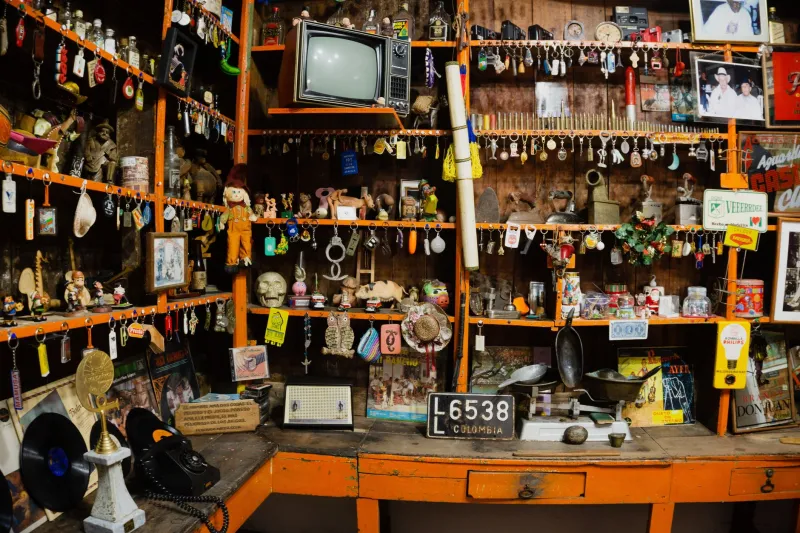
Somewhere in a studio apartment in Columbus, Ohio, there is a woman who has dedicated an entire wall to her collection of vintage Goosebumps paperbacks, arranged by publication date, backlit by a strand of orange LED lights, and framed on either side by hand-painted portraits of R.L. Stine that she commissioned from two different Etsy artists. There is a laminated index card on the shelf that explains the collection's context and significance. She made it herself. It is not a joke.
And honestly? That wall is doing more for American cultural preservation than half the institutions with "Foundation" in their name.
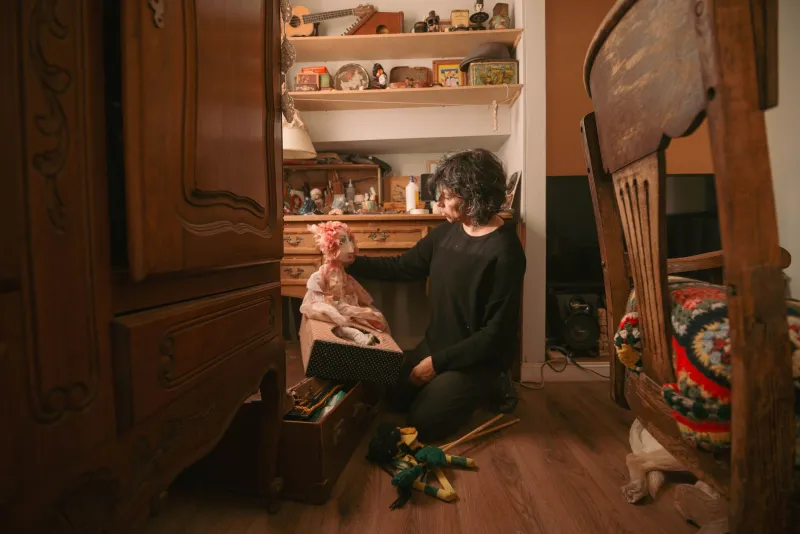
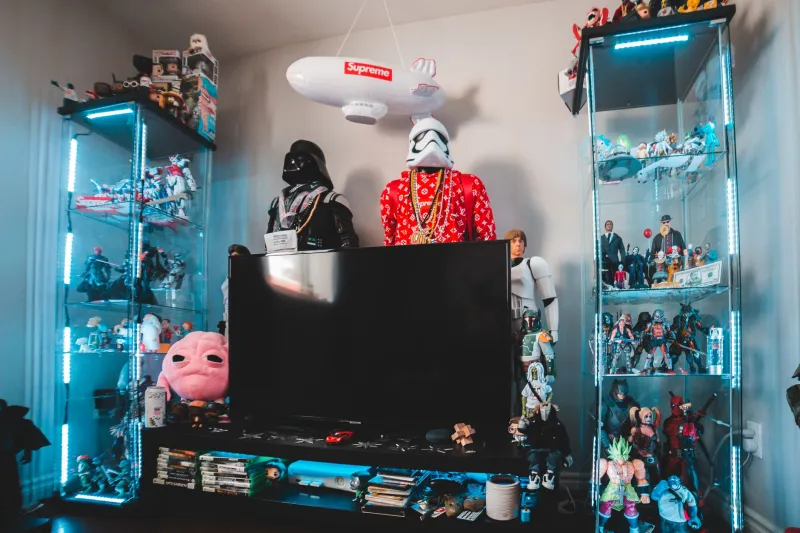
This is the era of the personal museum. Not the ironic one. Not the "lol look at all my weird stuff" one that you photograph for clout and then quietly disassemble when a date comes over. The real one. The one that says this is what I actually care about, displayed with intention, and you are a guest in my inner life. It's happening in apartments from Portland to Pittsburgh, and it is absolutely, defiantly sincere.
From Shelf Clutter to Intentional Curation
Let's be honest about what was happening five or ten years ago. People collected things, sure — but there was always this protective layer of irony draped over everything. The vintage Saved by the Bell lunchbox was "funny." The shelf of bootleg action figures was "kitsch." The framed poster of a direct-to-video Shrek knockoff was "so bad it's good." The wink was load-bearing. Without it, the whole thing might collapse into something embarrassing: genuine enthusiasm.
That wink has been quietly retired. What replaced it is something way more interesting.
The collectors and curators who are building these personal institutions aren't doing it to perform detachment. They're doing it because they figured out — probably around their third pandemic year — that the things you actually love are the most interesting things about you. Displaying them without apology is not cringe. It's confidence. It's the aesthetic equivalent of finally saying your order out loud at a restaurant instead of mumbling it into your menu.
The shift happened gradually, then all at once. Social media accounts dedicated to "shelfies" — careful, considered photographs of personal collections — started racking up serious followings. Not because they were weird or funny, but because they were specific. A shelf dedicated entirely to media featuring Brendan Fraser. A display case of every piece of merchandise ever produced for a mid-2000s Cartoon Network show that lasted one season. A corner of someone's bedroom organized around a single, deeply obscure pro wrestler from the late '90s. The specificity was the point. The specificity was the art.
The Psychology of the Physical Anchor
Here's something nobody in a minimalist home decor Instagram account will tell you: physical objects that represent your actual values and passions function as psychological anchors. They're not clutter. They're infrastructure.
When you walk into a room that contains the things you genuinely love — arranged with care, displayed with intention — something real happens in your nervous system. You feel located. You feel like yourself. In a culture that has spent the last decade trying to convince everyone to own less, feel less, commit to less, and keep everything light enough to pivot, the personal museum is a form of resistance. It says: I am not keeping my options open. These are my options. This is me.
Psychologists who study identity and environment have long understood that the objects we surround ourselves with aren't just decorative — they're communicative. They tell stories about who we are to ourselves, and to anyone who enters our space. The personal museum takes that principle and cranks it up to eleven. It's not just a few meaningful objects scattered around a room. It's a deliberate argument about what matters, constructed in three dimensions.
And in an era when so much of our identity lives on screens — in playlists and watchlists and social profiles that can be deleted in an instant — there's something almost radical about making your passions physical. Permanent-ish. Heavy enough that you can't just swipe them away.
The Social Media Effect (It's More Complicated Than You Think)
Obviously, Instagram and TikTok have something to do with all of this. They always do. But the relationship between social media and the personal museum is more nuanced than "people are doing it for content."
Yes, accounts dedicated to collection documentation have enormous audiences. Yes, the aesthetics of a well-curated shelf photograph beautifully. Yes, there is a creator economy built partly on "here is my extremely specific collection and here is its lore." All of that is real.
But the interesting thing is what happens after the post. People aren't dismantling their collections once the photo is taken. They're expanding them. They're getting more specific, not less. The audience response — the comments from strangers saying "I didn't know anyone else cared about this" — is functioning as permission. Permission to go deeper. Permission to stop hedging. Permission to actually be the person you've been quietly assembling evidence for.
The social media piece isn't creating the personal museum. It's validating the impulse that was already there, which is a meaningfully different thing.
What Makes a Collection a Museum
Not every pile of stuff is a personal museum, and the distinction matters. The museum requires intention. It requires a point of view. It requires the collector to have asked themselves, at some point: what is this actually about?
A shelf of vintage horror paperbacks is a collection. A shelf of vintage horror paperbacks arranged to trace the evolution of cover art typography, with handwritten notes about the illustrators, positioned next to a framed original sketch from a relevant artist — that's a museum. The difference is curatorial thought. The difference is someone deciding that the stuff they love deserves to be understood, not just owned.
This is where the personal museum gets genuinely interesting as a cultural phenomenon. Because when people start asking what is my collection actually about, they often discover things about themselves that they hadn't consciously articulated. The person who collects every piece of Animaniacs merchandise isn't just a fan of a cartoon — they're someone who has been processing the experience of being a weird kid who found their people in a specific piece of media, and they've been building a monument to that experience one eBay purchase at a time. That's not trivial. That's memoir in object form.
The Ugly Monkey Principle
Here at Ugly Monkey Shop, we have always operated on the premise that weird stuff is wonderful, and wonderful weirdos deserve a place to find their people. The personal museum is that principle applied to interior design, and we are here for every square inch of it.
Your apartment does not need to look like a hotel lobby. Your shelves do not need to be empty so that guests feel comfortable. Your guests should feel slightly disoriented, slightly delighted, and completely certain that they are in the home of someone who knows exactly who they are.
Build the shrine. Frame the thing. Write the little index card explaining its cultural significance. Backlight it if you want to. You are not embarrassing yourself. You are preserving something real in a world that keeps trying to make everything disposable.
The museum is open. The curator is you. And the admission price is just being willing to look.