Ceramic Armadillos and Proud: How Tourist Trap Souvenirs Became the Interior Design Flex of the Decade
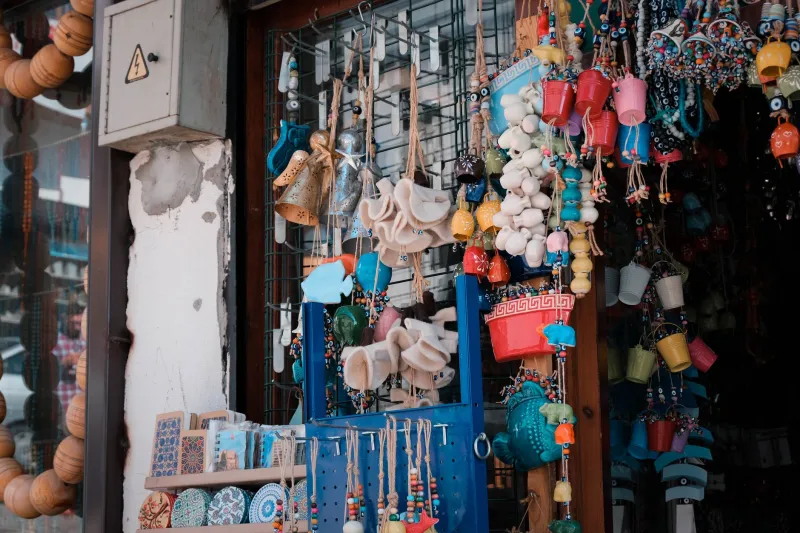
There is a shelf somewhere in a carefully curated Brooklyn apartment holding a six-inch ceramic replica of the Gateway Arch, a shot glass shaped like a cowboy boot, and a refrigerator magnet depicting a cartoon lobster wearing a Maine state flag as a bib. The person who assembled this collection did not do it as a joke. They did it with intention, with a budget, and with the same energy other people reserve for sourcing mid-century modern side tables.
Welcome to the era of the unironic tourist haul.
The Gift Shop Has Always Been Telling the Truth
For decades, the roadside attraction gift shop occupied a very specific cultural role: it was the place you bought something out of obligation, something you'd lose in a junk drawer by March. The snow globe of Mount Rushmore. The spoon rest shaped like Florida. The tote bag that said "I SURVIVED THE WORLD'S LARGEST BALL OF TWINE" in a font that had clearly never met a graphic designer.
We treated all of it like visual noise. Background clutter. The aesthetic equivalent of a participation trophy.
Then something shifted. Maybe it was the pandemic clearing out our tolerance for minimalism. Maybe it was the slow cultural exhaustion of pretending that a gray linen couch and a single potted fiddle-leaf fig constituted a personality. Whatever the cause, people started looking at the stuff they'd been dismissing for thirty years and thinking: actually, that ceramic armadillo from a San Antonio gas station slaps.
And they were right.
Why Bad Taste Was Always the Bravest Taste
Here's what nobody wants to admit about high-end interior design: it is, at its core, deeply frightened. The neutral palette, the deliberate restraint, the commitment to objects that don't commit to anything — it's the decorating equivalent of giving a non-answer at a job interview. It's safe. It's defensible. Nobody will laugh at your Restoration Hardware credenza.
But a hand-painted ceramic pelican from a Destin, Florida beach shack? That thing has conviction. It has a point of view. It walked into the room, sat down, and said I am from somewhere specific and I am not leaving.
That specificity is exactly what the tourist trap souvenir has always had, and what the design world spent decades pretending wasn't valuable. Regional kitsch is honest in a way that a $400 artisanal throw pillow simply cannot be. The souvenir knows what it is. It has no aspirations beyond delighting a stranger in a place they've never been before. There's something almost noble about that.
The Hunt Is Half the Point
Ask anyone who's gone deep on this aesthetic and they'll tell you the same thing: you cannot fake it with a curated online purchase. The entire value system of the tourist trap haul is built on provenance. It matters that you were actually at the South of the Border complex on I-95 at eleven PM on a Tuesday. It matters that you pulled over specifically for the fudge and left with a six-dollar sombrero ornament you didn't need. The story is the object.
This is why the collector mindset has merged so naturally with the souvenir revival. These aren't people wandering into a Cracker Barrel and grabbing something ironic. They're planning road trips around the density of roadside attractions. They're budgeting for state fair circuits. They know which truck stop in New Mexico has the best selection of hand-painted thunderbird ashtrays and they have opinions about the quality of the airbrushing.
The worst souvenir t-shirt — the one with the iron-on decal of a cartoon cactus wearing sunglasses, the one that says "ARIZONA: IT'S A DRY HEAT" in a font that peaked in 1994 — is now a grail item if you found it in the actual desert. Context is everything. Effort is everything.
The Shelf Is a Biography
What makes the tourist trap aesthetic work as interior design is the same thing that makes any good collection work: it tells you who someone is and where they've been. Walk into a home where every surface holds a piece of regional American kitsch and you are immediately reading a travel memoir. That pennant from a minor league baseball team in Chattanooga. That novelty keychain from a cave tour in Kentucky. That inexplicable bobblehead of a local politician from a small Wisconsin town.
Each object is a chapter. The collection as a whole is a portrait.
This is the part the minimalists missed. The point of filling your home with things isn't clutter — it's autobiography. A room that tells you nothing about the person who lives there is a room that doesn't actually belong to anyone. The tourist trap shelf says I was here, I found this delightful, and I am not embarrassed.
That's not bad taste. That's confidence.
The Ugly Monkey Principle Applied to Square Footage
Look, we've always believed that the things other people find embarrassing are usually the most interesting things in the room. The novelty item that makes a design snob flinch is doing more emotional work than anything that matches. It's creating a reaction. It's generating a conversation. It's making someone feel something, even if that something is mild offense.
The ceramic state capital collection. The aggressively specific regional pride merchandise. The tourist attraction shot glass wall. These are not failures of taste. They are the artifacts of a person who engaged with the world and kept the receipts.
The only real decorating mistake is a room that makes no argument at all.
Start Your Collection Before Everyone Figures This Out
Here's the uncomfortable truth about any aesthetic movement: there's a window. Right now, the tourist trap haul is still genuinely weird enough to be interesting. In eighteen months, there will be a Brooklyn boutique selling "curated roadside Americana" for four hundred dollars a piece, and the magic will be three-quarters gone.
So go now. Hit the highway. Pull over at every gift shop that has a sign painted directly on the building. Buy the ceramic pelican. Buy the shot glass shaped like a cowboy boot. Buy the tote bag from the world's largest ball of twine and display it like the artifact it is.
Your living room deserves a point of view. America has been handing you the raw materials for decades. The only thing left to do is take them seriously.