Everybody Is Being Weird in Exactly the Same Way and It's Freaking Us Out
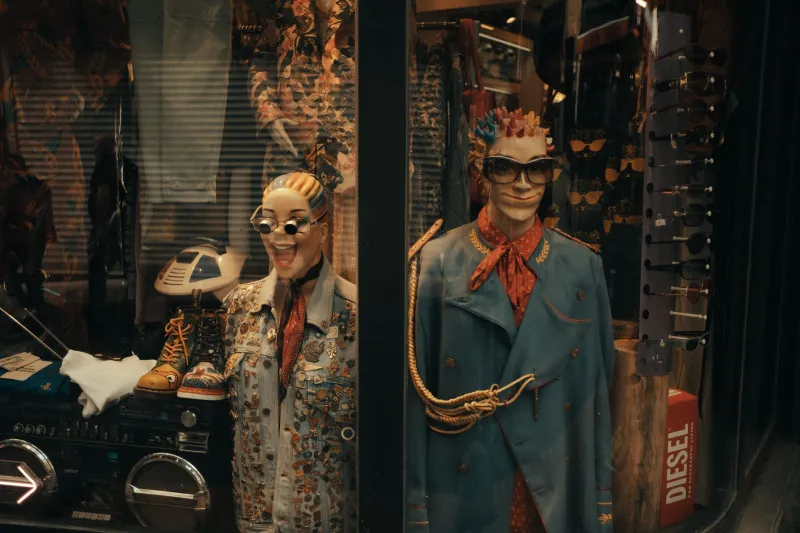
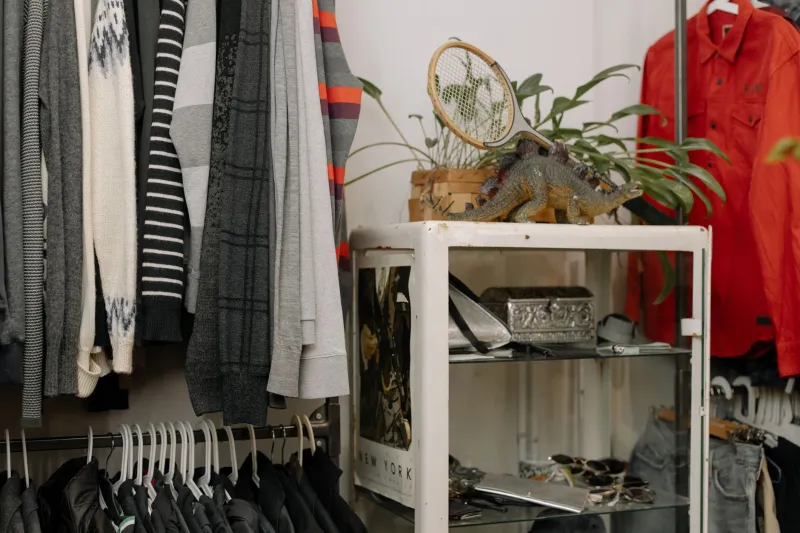
Let's describe a person. She thrifts exclusively. Her apartment contains at least one vintage lamp with a maximalist shade, a gallery wall of mismatched frames, and a shelf of objects that are technically tchotchkes but which she refers to as "curated." She has strong opinions about cottagecore versus goblincore and where she falls on that spectrum. She wears at least one item of clothing that she describes as "chaotic" but which you have seen on fourteen other people this week. She is, she would like you to know, a lot.
Here's the thing. She is not a lot. She is a very specific aesthetic category that the internet has optimized for discoverability, and she is performing it with the same faithful precision that her mother once performed "preppy" and her grandmother once performed "respectable housewife." The vocabulary has changed. The conformity mechanism has not.
This is the authenticity paradox, and it is one of the more genuinely strange cultural phenomena of the current decade.
How We Got Here
The authenticity economy did not emerge from nowhere. It was a reaction — a legitimate, understandable reaction — to the particular kind of soul-crushing sameness that dominated mainstream culture in the 2010s. The era of Instagram face, identical Millennial pink cafes, and the tyranny of the curated-minimalist aesthetic produced a genuine backlash. People wanted to be weird. They wanted permission to like strange things, wear unflattering clothes on purpose, and display their obsessions without apology.
This was good. This was healthy. The ugly monkey impulse — the desire to embrace what's strange and personal and slightly off-putting — is a fundamentally human one, and watching it get cultural permission felt like a genuine liberation.
Then the algorithm noticed.
And when the algorithm notices something performing well, it does what algorithms do: it amplifies it, recommends it, and gradually shapes it into a template that can be replicated at scale. The authentic weird got optimized. The optimized weird got replicated. The replicated weird became the new normal, wearing the costume of the old abnormal.
The Conformity Paradox in Practice
Here is a real thing that exists: aesthetic categories on TikTok that are defined specifically by their rejection of aesthetic categories. These communities are built around the stated principle of refusing to be placed in a box. They have a name, a visual language, a set of approved references, and a clearly defined set of behaviors that signal membership.
They are, in other words, a box.
The psychological mechanism at work here is not new — sociologists have documented it in punk, in hippie culture, in the early adoption of any countercultural movement. Rebellion gets absorbed. What's interesting about the current moment is the speed of absorption and the degree to which participants seem aware of it while remaining unable to escape it.
"I know that my whole thing is a thing," admits Priya, a twenty-four-year-old in Portland who describes her personal style as "unhinged librarian energy." "I know there are like forty thousand other unhinged librarians on TikTok. I still feel like it's me. I don't know how to explain that."
She doesn't need to explain it. It is a completely coherent emotional reality. The fact that your authentic self resembles a million other authentic selves doesn't make your version of it less genuine. But it does make it less distinctive, which is precisely the thing it was supposed to be.
The Performance Audit
There is a useful exercise for distinguishing genuine eccentricity from its algorithmic simulacrum. Ask yourself this: would you still do this thing if nobody could see it?
Genuine weirdness survives observation removal. The person who has been collecting vintage medical equipment since age twelve, not because it's an aesthetic but because they find it genuinely compelling, does not stop collecting when the audience disappears. The person performing vintage medical equipment collecting as an identity signal might.
This is not a moral judgment. Performance is a completely human behavior, and the line between performing yourself and being yourself is blurry in ways that philosophers have been arguing about for centuries. But it is a useful diagnostic.
The aestheticization of weirdness has produced a particular kind of person who is fluent in the language of individuality without necessarily having done the underlying work. They know the references, own the items, use the vocabulary — but the passion underneath is thin in a way that becomes apparent when the trend cycle moves on.
The Ugly Monkey Problem
Here's where it gets genuinely interesting for those of us who have always been weird without a roadmap.
The authentic weirdos — the people who were buying ugly ceramic monkeys and obscure fan merch and genuinely terrible novelty items before any algorithm told them to — have been in a strange position for the last several years. Their native behavior has been repackaged as an aesthetic. Their instincts have been codified into a checklist. The thing they did because they couldn't help themselves has been converted into a thing that other people do because it tests well.
The response to this among genuine eccentrics has been fascinatingly varied. Some have retreated into even more obscure territory, staying one step ahead of the trend cycle through sheer commitment to the strange. Some have leaned in, recognizing that the mainstreaming of their behavior has created a market for their actual collections. Some have simply stopped caring, which might be the most authentically weird response of all.
Is There an Exit?
The authenticity paradox does not have a clean resolution. You cannot simply decide to be authentic and thereby become so — the decision itself is a performance. You cannot opt out of the trend cycle by ignoring it, because ignoring it is itself a legible aesthetic position.
What you can do is something quieter and less photogenic. You can like things because you like them, without auditing whether your liking is sufficiently original. You can buy the weird thing because you want it, not because it signals a particular kind of person. You can let your collections be genuinely yours rather than deliberately curated for an imagined audience.
This is not advice. This is barely even a suggestion. The algorithm will find you anyway.
But there is a difference between being weird on your own terms and performing weirdness on the internet's terms, and that difference lives in the part of you that knows — really knows — what you actually love, independent of whether anyone is watching.
The people who know that difference are the ones worth talking to. They're usually not posting about it.