Your Walls Have a Story and Minimalism Is Not Invited: The Case for Decorating Like Nobody Is Watching
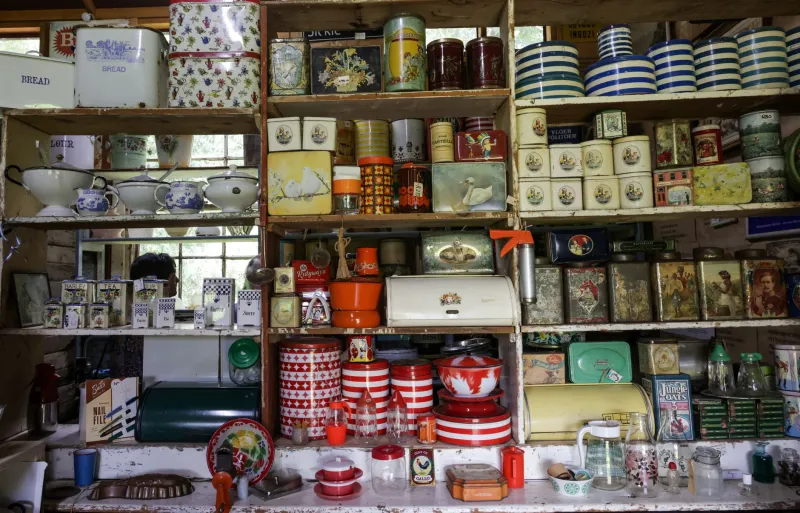
Let's talk about the beige apartment. You know the one. You've seen it on Instagram, on Zillow listings, in every lifestyle brand lookbook published in the last decade. White walls. A single potted plant. One carefully chosen piece of abstract art that communicates nothing about the person who hung it. A throw blanket draped with suspicious precision over a neutral-toned couch. The whole space looks like it was designed by someone whose only instruction was "offend no one and reveal nothing."
This is what passes for aspirational interior design in 2024, and it is a lie. Not a small lie — a big, culturally significant lie about what it means to live in a space and make it yours. The truth is uglier and more interesting: the most authentic home you will ever enter looks like the inside of someone's obsessive brain, rendered in three dimensions, expressed across every available surface. It is covered in stuff. Meaningful, specific, deeply personal stuff. And it is the most honest room in the building.
The Algorithm Made Everyone's Home Look the Same
This is not an accident. The homogenization of American interior spaces has been driven by the same forces that homogenized everything else — social media optimization, rental market anxiety, the ambient pressure to present a version of your life that photographs well and offends no algorithm. When your apartment exists partly as a backdrop for content, the content demands neutrality. Neutrality is legible. Neutrality is shareable. Neutrality doesn't alienate potential followers who might not share your specific enthusiasm for 1990s professional wrestling memorabilia.
The problem is that neutrality also communicates nothing. A beige apartment tells you exactly one thing about the person who lives there: they wanted a beige apartment, or they were afraid to want anything else. Compare that to a space where every shelf has a story, where the art on the walls reflects a genuine obsession, where the objects on the coffee table are there because they mean something rather than because they photograph well. That space tells you who you're dealing with before anyone opens their mouth.
This is terrifying to some people. It is the whole point.
The Shrine Is Not a Mess, It's a Map
There is a distinction worth making between a curated collection and clutter, and it is entirely about intentionality. Clutter is stuff you haven't decided about yet — the mail pile, the gym bag that never got unpacked, the miscellaneous objects that drifted into your space without invitation. A shrine is the opposite: it is the deliberate, considered accumulation of objects that represent something real about who you are and what you love.
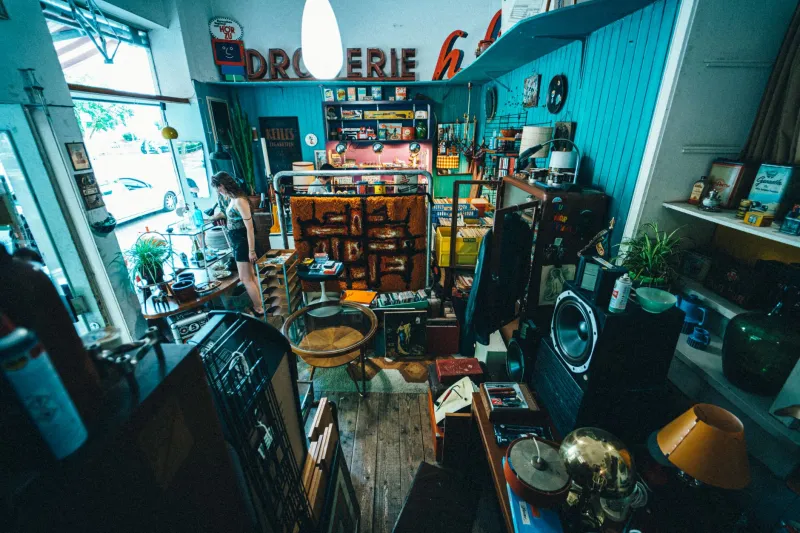
The person with a full wall of framed concert posters from every show they've attended since 2003 is not disorganized. They are documented. The collector with a dedicated shelf for their vintage horror movie memorabilia hasn't lost control of their space — they've asserted control over it in the most specific way possible. The arrangement of a great personal collection is a form of editing, a curatorial act that reflects real aesthetic judgment and genuine passion.
When someone walks into your space and immediately understands something true about you from the objects on your walls, you have succeeded at the actual goal of interior design, which is not "looks good in photos" but "communicates something real about the human who lives here."
Maximalism Has Always Been the Honest Position
The historical record on this is worth consulting. Before the minimalist aesthetic took hold as a marker of taste and sophistication, the prevailing approach to home decoration in America was accumulative. Victorian parlors were packed with objects — curiosities, family portraits, decorative items, plants, books, collections of every conceivable type. The density of a room communicated prosperity, personality, and the richness of a life lived. Empty space was not aspirational. Empty space meant you hadn't been anywhere or collected anything worth showing.
Somewhere in the 20th century, that flipped. Modernism made space itself the luxury. The fewer objects you needed to feel at home, the more refined your sensibility was supposed to be. This is a perfectly coherent aesthetic philosophy and it produced some genuinely beautiful spaces. It also produced the cultural conditions in which a person can feel embarrassed about loving things enough to display them.
That embarrassment is the enemy. The Ugly Monkey Shop position — stated plainly, without apology — is that loving things enough to surround yourself with them is not a character flaw. It is a character. The person who has curated their space around a genuine obsession has done something the minimalist apartment cannot do: they have made the room irreplaceable. Nobody else's home looks exactly like that. Nobody else's collection is arranged exactly that way. It is theirs in a way that a beige couch and a succulent can never be.
Building the Museum of You
If you're ready to commit — and you should be — here is the operating principle: every object in your space should be able to answer the question "why is this here?" The answer doesn't have to be sophisticated. "Because I've loved this band since I was fourteen and this poster was at every important moment of my life" is a perfect answer. "Because I found this ceramic thing at a flea market and it made me laugh" is a perfect answer. "Because it was on sale and it matched the couch" is the answer that does not belong in your museum.
Start with the things you already own that you've been hiding. The action figures in the box because you thought they looked childish. The collection of vintage paperbacks you've been keeping in a closet because you weren't sure if shelves full of pulp fiction were "appropriate." The framed print from your favorite movie that you took down before a date and never put back up. These are the objects that belong on your walls. The ones you've been curating without permission are the ones that know you best.
The space you live in is the longest conversation you have with yourself. Fill it with things that tell the truth.