Proudly Terrible: How Failing at Fashion Became the Coolest Thing You Can Do
Somewhere between the fourth consecutive year of influencers selling us 'effortless' morning routines that require seventeen steps and a ring light, something snapped. A generation of people looked at the optimized, filtered, perfectly hashtagged version of human existence and collectively decided: nope. Hard pass. We're going to wear the weird cargo pants that make our legs look like upholstered furniture, and we're going to feel amazing about it.
Welcome to the era of deliberate unflattery. Pull up a chair — preferably one you found on the curb.
The Influencer Industrial Complex Ate Itself
For about a decade, social media handed us a very specific instruction manual for existing in public. Dress in your 'color season.' Master your body type. Contour everything. Layer neutrals. Buy the Stanley cup. The rules multiplied faster than anyone could follow them, and following them cost money — a lot of money — in an economy that wasn't exactly handing out raises like Halloween candy.
So Gen Z, in its infinite chaotic wisdom, did what any sensible generation would do when handed an impossible rulebook: they lit it on fire and posted the video.
The 'fail aesthetic' didn't emerge from nowhere. It was a logical, almost mathematical response to years of aspirational content that felt increasingly fake, increasingly expensive, and increasingly exhausting to consume. When every outfit on your For You Page looks like it was assembled by a team of stylists working off a mood board, wearing your dad's old Looney Tunes sweatshirt to a party starts to feel less like a mistake and more like a political statement.
What 'Bad' Actually Looks Like (And Why It Takes Guts)
Here's the thing nobody tells you about intentionally unflattering fashion: it's genuinely hard to pull off. Not because it requires skill in the traditional sense, but because it requires a specific brand of self-possession that most of us spend years trying to develop.
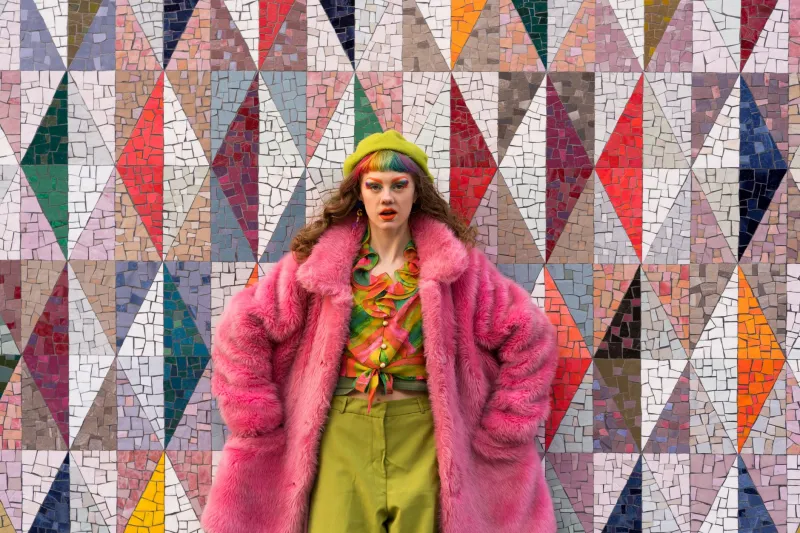
Wearing the ill-fitting blazer. Rocking the jeans that bunch weird. Committing fully to the graphic tee featuring a mid-tier regional band from 2003. These choices demand that you walk into a room completely unbothered by the possibility that someone might think you don't know what you're doing. The irony is that pulling off 'bad' fashion requires more confidence than pulling off 'good' fashion ever did.
TikTok has been the laboratory for all of this. Videos tagged with variations of 'unflattering outfit check' and 'I dressed like a middle schooler today' rack up millions of views — not because people are laughing at the creators, but because there's something genuinely liberating about watching someone wear a horizontally striped turtleneck under a puffer vest and just... own it. Completely, cheerfully own it.
The comment sections on these videos are basically group therapy. 'You look amazing.' 'This gave me permission to wear my weird stuff.' 'I felt so seen by this.' The kids are not okay in the best possible way.
Ugly Is a Vibe, Not an Accident
At Ugly Monkey Shop, we've always operated on the premise that weird is a feature, not a bug. So we feel professionally qualified to point out that what's happening in youth fashion right now isn't actually about incompetence — it's about redefining what competence means.
Being 'bad' at trends, in this context, means opting out of the entire framework that decides what trends are valid in the first place. It's a rejection of the idea that fashion is something you have to get right according to someone else's rubric. It's choosing to measure success by how much fun you're having rather than how many saves your outfit post gets.
The brands that are thriving in this environment understand this instinctively. Merchandise that leans into its own goofiness — the stuff that's loud, a little ugly, and unapologetically specific — is moving. Meanwhile, the sleek, aspirational stuff that tries to appeal to everyone often ends up resonating with no one.
The Rebellion Is in the Wrinkles
Let's talk about what this trend is actually rebelling against, because it matters. The self-optimization industrial complex — fitness apps, skincare routines, productivity systems, 'that girl' morning schedules — has been telling young people for years that their natural state is a problem to be solved. You are a fixer-upper. You are a before photo. You are a project.
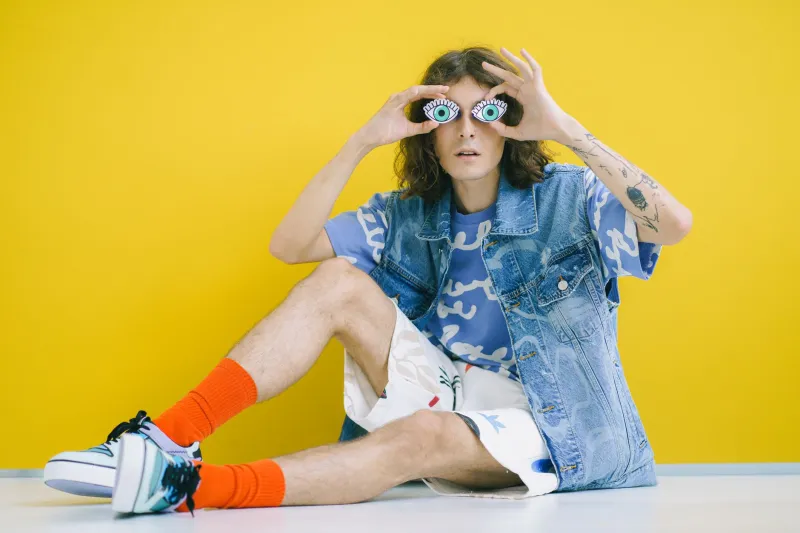
Dressing badly, then, becomes a way of saying: I'm not a project. I'm a finished product. The wrinkled shirt is a feature. The mismatched socks are a design choice. The shoes that are technically from the wrong decade are exactly the right shoes because I like them and I put them on my feet this morning.
This is what makes the fail aesthetic different from simple sloppiness. Sloppiness doesn't care. The fail aesthetic cares deeply — it just cares about completely different things than the algorithm wants it to care about.
So What Do You Actually Buy?
If you're ready to embrace your inner fashion disaster (and honestly, why wouldn't you be), the shopping list looks less like a capsule wardrobe guide and more like a fever dream. Novelty items. Loud prints. Merchandise from things you loved before you were old enough to have good taste. Stuff that makes people ask 'where did you even find that?' and means it as a compliment.
The best part about this trend — and we use that word loosely, because the whole point is that trends are optional — is that it democratizes style in a way that expensive, aspirational fashion never could. You cannot buy your way into authentic weirdness. You can only grow it from the inside, nurture it with zero apologies, and then walk out the door wearing something that makes a stranger on the subway smile.
That's not being bad at fashion. That's being extraordinary at being yourself.
And if that self happens to be wearing a fanny pack and a shirt with a wolf howling at the moon? Honestly, same. We sell those. No judgment — only celebration.