Ugly on Purpose: How Bad Taste Became the Most Coveted Aesthetic in America
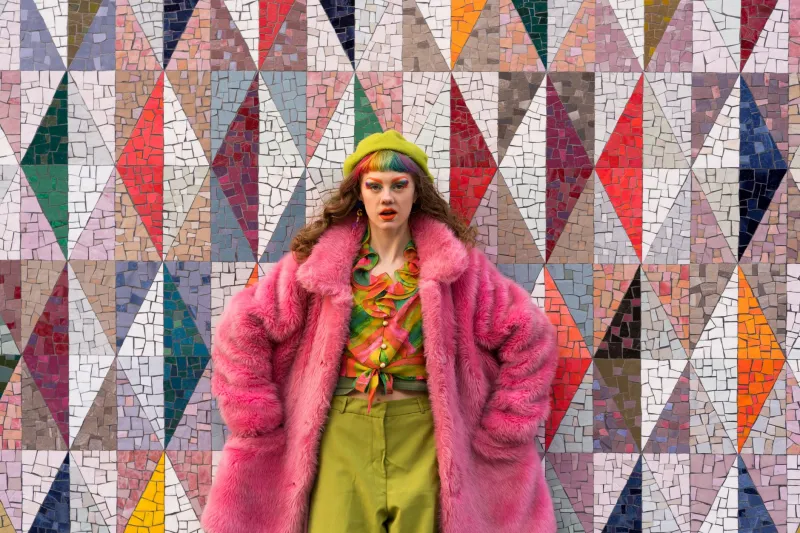
There is a $500 sweater currently for sale at a luxury retailer that looks like something a colorblind substitute teacher bought at a TJ Maxx in 1994. It has been photographed on celebrities. It has a three-month waitlist. It is, by every traditional metric of fashion, absolutely hideous — and that is precisely the point.
Welcome to the age of intentional ugliness, where the rules of taste have not just been broken but been cheerfully set on fire, roasted over, and turned into content.
How We Got Here: A Brief and Chaotic History
For most of the 20th century, fashion operated on a fairly clean hierarchy. There was good taste — clean lines, neutral palettes, classic silhouettes — and there was bad taste, which lived in the clearance section and did not get invited to the party. The whole system depended on everyone agreeing that ugly was a failure state.
Then something shifted. Call it irony, call it postmodernism, call it millennials coping with economic anxiety through thrift store aesthetics — whatever the cause, sometime in the early 2000s, wearing something knowingly terrible started to read as cool. The ugly Christmas sweater went from embarrassing hand-me-down to coveted party costume. Crocs went from medical footwear punchline to collaborative canvas for Balenciaga and Post Malone. Velour tracksuits came back. Frosted tips are genuinely threatening to come back.
And then Gen Z arrived and removed the last remaining guardrails entirely.
The Gen Z Effect: Irony Collapses Into Sincerity
Here's the thing that makes current fashion culture genuinely fascinating and slightly difficult to explain to anyone over 50: the irony is gone. Early-millennium bad taste was performed — you wore the ugly thing with a wink, a knowing smirk, a "can you believe I found this?" energy. The badness was the joke.
Gen Z killed the joke by actually meaning it.
When a 22-year-old in Brooklyn puts together an outfit featuring a neon windbreaker, cargo pants with seven functioning pockets, platform sneakers, and a graphic tee from a brand that hasn't existed since 2001 — they're not being ironic. They genuinely think it looks good. And increasingly, they're right, because "looking good" has been quietly redefined around authenticity rather than adherence to any external standard of correctness.
Tackiness, in this new framework, is honest. It's personal. It's anti-aspirational in the best possible way. It says: I dressed for myself and nobody else, and I'm comfortable enough to let that be weird.
That kind of confidence is, it turns out, extremely attractive.
The Brands That Bet on Ugly and Won
The market moved fast once the cultural shift became undeniable.
Crocs is the canonical example — a shoe so aggressively utilitarian and aesthetically divisive that it became a cultural flashpoint before becoming a fashion staple. The brand leaned into the controversy instead of running from it, collaborated with everyone from KFC to Balenciaga, and turned the holes in their shoes into a platform (literally, in the case of their platform variants). Crocs revenue hit over $3.5 billion in 2022. The ugly shoe won.
Fila and Champion spent years as discount bin staples before being reclaimed as retro-authentic streetwear. The logos that once read "I bought this at Walmart" now read "I have a sophisticated relationship with nostalgia."
Spirit Halloween and its entire aesthetic — garish, loud, maximalist — has become genuinely influential in costume and novelty culture, inspiring year-round aesthetics rather than seasonal ones.
Smaller brands have been even more aggressive. Entire direct-to-consumer companies have built their identities around being deliberately, specifically, wrong — ugly fonts, clashing colors, product photography that looks like it was shot on a flip phone in a parking lot. The roughness signals authenticity. The imperfection signals humanity. In a world of sterile, algorithmic, perfectly lit content, ugly is the most disruptive thing you can be.
At Ugly Monkey Shop, we understood this from the jump. Weird stuff for wonderful weirdos isn't a niche — it's the leading edge.
The Psychology of Choosing Ugly
Why does this resonate so deeply right now? A few theories worth considering:
Aspiration fatigue. Decades of being sold an idealized, impossible version of life through advertising and social media have left a lot of Americans exhausted. Ugly aesthetics are a rejection of that pressure. They say: I'm not performing for you. I'm not trying to make you want my life. I'm just living it, loudly, in these incredible cargo shorts.
The authenticity premium. Trust in institutions, brands, and polished spokespeople is at historic lows. What people trust now is rawness, specificity, and the sense that something is genuinely meant rather than carefully constructed. An ugly, sincere thing beats a beautiful, hollow one every single time.
Community through specificity. Just like hyper-niche collecting creates instant bonds between strangers, hyper-specific bad taste does the same thing. If you're wearing a shirt from a defunct regional pizza chain, and someone else recognizes it, you have found your people. The weirder the reference, the stronger the connection.
How to Wear Bad Taste Well (A Totally Serious Guide)
First: commit. Half-hearted ugly is just ugly. Fully committed ugly is a look. There's a universe of difference between accidentally wearing mismatched patterns and intentionally building an outfit around the most aggressively wrong color combination you can find. The confidence is the whole point.
Second: know your references. The best intentionally bad taste is informed bad taste. Wearing a bootleg-looking graphic tee hits different when you can explain exactly where the aesthetic comes from. You're not clueless — you're fluent.
Third: mix your registers. The most interesting ugly-aesthetic outfits combine multiple timelines and contexts. Something cheap with something expensive. Something retro with something brand new. Something formal with something that belongs in a gas station. The collision is where the magic lives.
Fourth: enjoy the reactions. Some people will not get it. Some people will think you just got dressed in the dark. Let them. The ones who do get it will find you immediately, and those are exactly the people worth knowing.
The Ugly Truth
Good taste was always a moving target — a set of rules invented by people with the power to set rules, enforced through social pressure and the fear of being laughed at. Bad taste, in the traditional sense, was just everything those people decided not to like.
What's happened over the last decade is that a generation decided the fear wasn't worth it. That the gatekeepers weren't credible. That authenticity — even garish, mismatched, proudly weird authenticity — was worth more than approval.
So irony didn't die so much as it grew up. It stopped being a shield and became a statement. The ugly thing isn't a joke anymore. The ugly thing is the point.
And honestly? It looks pretty great from here.